

Jitladda Deerojanawong, M.D.
E-Mail:
Expertise:
Clinical Interests:
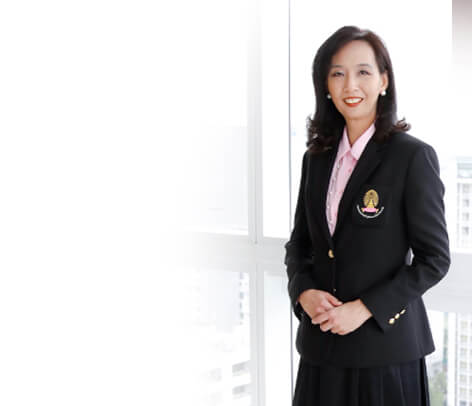
Nijasri Charnnarong Suwanwela, M.D.
Director of Chulalongkorn University International Medical Program

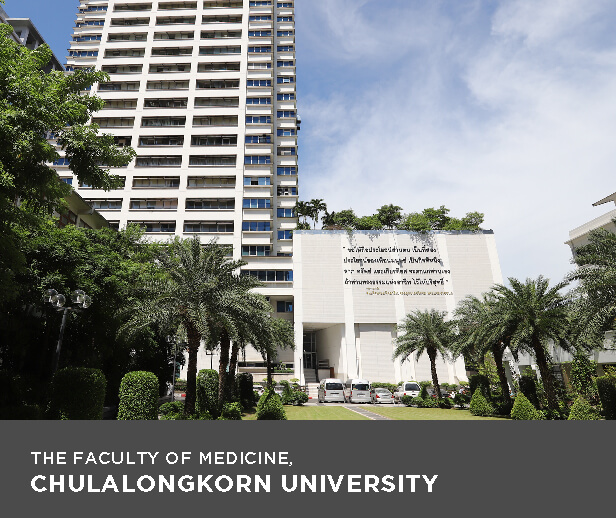
CU-MEDi is the first international medical program in Thailand which admits bachelor’s degree graduates and requires four years of study. The curriculum is designed as an integrated course where basic scientific knowledge is delivered alongside clinical exposure. Students will be immersed in a clinical environment from day 1 so they will be able to correlate the patients’ problems they see on the wards with the anatomy and pathophysiology they learn inside the classroom. There is a big emphasis on an interactive learning culture where students with diverse backgrounds bring topics to discuss in small groups, which will help develop their leadership, teamwork, and communication skills along the way.
During the final year, students will have the opportunity to gain clinical experience abroad in hospitals of our partnered institutes in the United States or the United Kingdom. Additionally, we promote our graduates to pursue alternative careers in medicine if they wish to do so, such as physician-scientists, medical researchers, university professors, healthcare leaders, or physician-engineers. We will equip our students with 21st-century skills and bring out individual talents of each student so they can successfully achieve their ultimate clinical and professional goals.
CU-MEDi is the first international 4-year medical program in Thailand which admits bachelor’s degree graduates. The curriculum is designed as an integrated course where basic scientific knowledge is delivered alongside clinical exposure. Students will be immersed in a clinical environment from day 1 so they will be able to correlate the patients’ problems they see on the wards with the anatomy and pathophysiology they learn inside the classroom. There is a big emphasis on an interactive learning culture where students with diverse backgrounds bring topics to discuss in small groups, which will help develop their leadership, teamwork, and communication skills along the way. During the final year, students will have the opportunity to gain clinical experience abroad in hospitals of our partnered institutes in the United States or the United Kingdom. Additionally, we promote our graduates to pursue alternative careers in medicine if they wish to do so, such as physician-scientists, medical researchers, university professors, healthcare leaders, or physician-engineers. We will equip our students with 21st-century skills and bring out individual talents of each student so they can successfully achieve their ultimate clinical and professional goals.
The Doctor of Medicine (International Program) has the objectives to produce doctors who are well equipped with the following skills:
The Doctor of Medicine (International Program) has the objectives to produce doctors who are well equipped with the following skills:
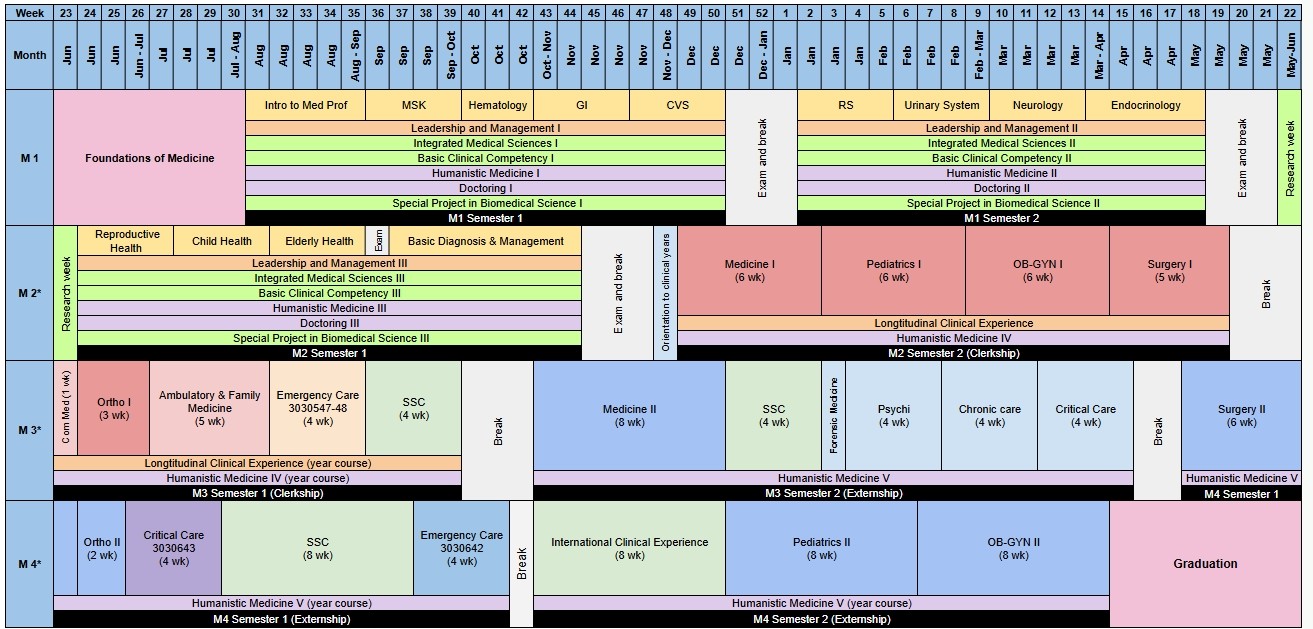
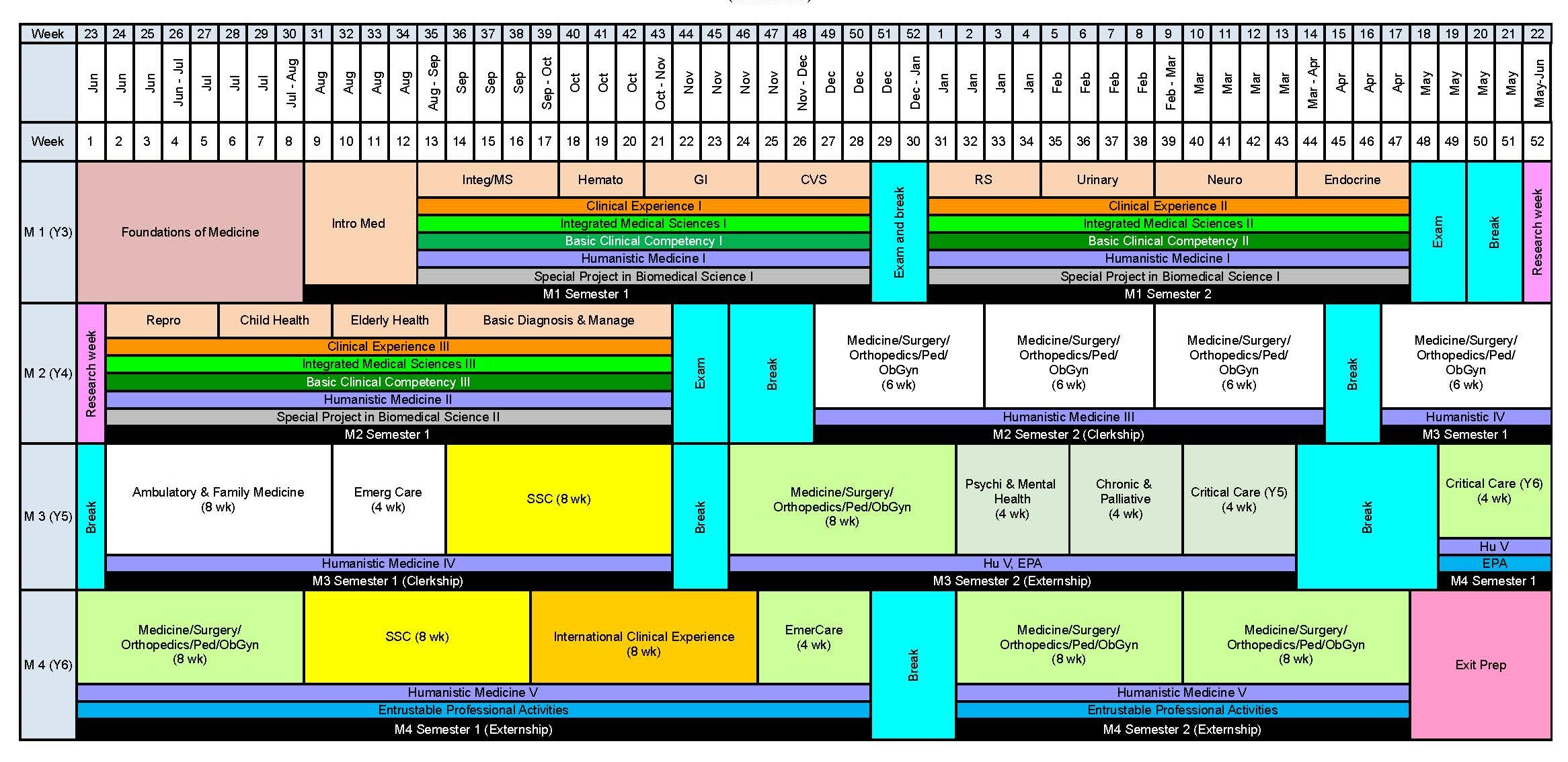
For bachelor’s degree graduates, the CU-MEDi requires four years of study, which consists of eight semesters and are further divided into three phases:
1. The ‘pre-clerkship’ phase (three semesters) takes place primarily in a classroom setting, and through a series of integrated medical science modules, provides students with essential skills prior to the clerkship year.
2. The ‘clerkship’ phase (two semesters) requires students to rotate through different clinical areas of a hospital including inpatient wards, outpatient clinics, operating rooms, labor rooms, and emergency departments (these are referred to as ‘rotations’). Students will have the opportunity to apply the medical knowledge and skills they obtained during the pre-clerkship phase in the treatment of real patients.
3. The ‘externship’ phase (three semesters) prepares students to become competent physicians by emphasizing clinical decision-making and management skills. In this phase, students will have the opportunity to interact with patients in hospitals abroad, or they may choose to enhance their clinical or research skills according to their individual preference.
1) Medical-Specific Requirement
1.1 Humanistic Medicine
1.2 Medical Skills and Medical Sciences
1.3 Clinical Performance
2) Student-Selected Components (SSCs)
155 Credits
12 Credits
55 Credits
88 Credits
12 Credits
Updated 30 April 2024
1) Medical-Specific Requirement
1.1 Humanistic Medicine
1.2 Medical Sciences
1.3 Clinical Performance
2) Student-Selected Components (SSCs)
154 Credits
14 Credits
54 Credits
86 Credits
12 Credits
1) Medical-Specific Requirement
1.1 Humanistic Medicine
1.2 Medical Skills and Medical Sciences
1.3 Clinical Performance
2) Student-Selected Components (SSCs)
155 Credits
12 Credits
55 Credits
88 Credits
12 Credits
Updated 30 April 2024
1) Medical-Specific Requirement
1.1 Humanistic Medicine
1.2 Medical Sciences
1.3 Clinical Performance
2) Student-Selected Components (SSCs)
154 Credits
14 Credits
54 Credits
86 Credits
12 Credits
The Pre-Clerkship Phase
takes place in classroom settings at the Faculty of Medicine, Chulalongkorn University. The faculty provides access to smart classrooms that are suited for interactive and team-based learning.
The Clerkship and Externship Phases
rotations will take place primarily at the Queen Savang Vadhana Memorial Hospital in Chonburi. Students will rotate through different clinical areas of the hospital including inpatient wards, outpatient clinics, operating rooms, labor rooms, and emergency departments. However, a few rotations will take place at King Chulalongkorn Memorial Hospital and at foreign hospitals when students spend time abroad in the externship phase.
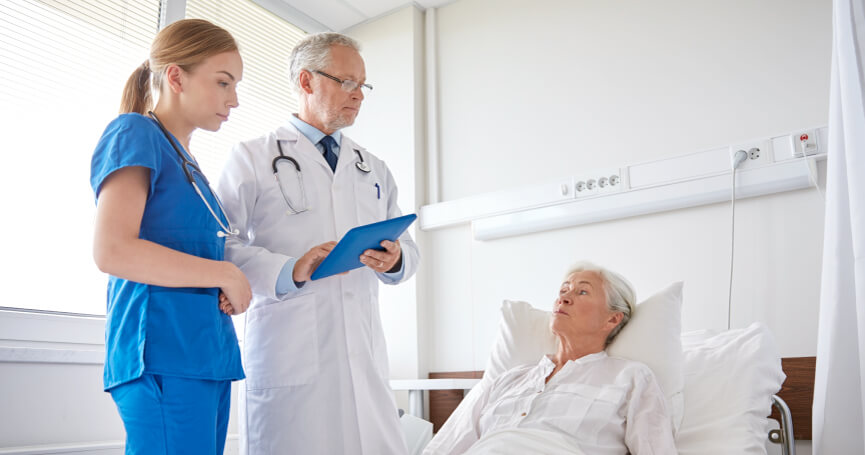
CU-MEDi students will have the opportunity to undergo clinical training in global affiliated hospitals for a minimum of eight weeks during the “externship” phase of the program. In addition, there are twelve elective weeks when students can choose their own subjects to enrich their clinical or research skills and pave the way for their future careers.
This program offers additional clinical experience for CU-MEDi students, who will undergo clinical training in different healthcare systems around the world. Placement will be determined by CU-MEDi supervisors and clinical supervisors from affiliated hospitals primarily based on the students’ interests. Supervisors abroad will be responsible for overseeing clinical work and for providing advice and support to academic trainees. The minimum period for global clinical training is eight weeks.

Apart from the eight-week clinical training abroad period, CU-MEDi students have twelve elective weeks during the “externship” phase. The purpose of the SSCs is to let students choose their own subjects according to what they want to pursue. They can extend their eight-week clinical training abroad or they can conduct basic or clinical research either locally or globally. They can also join groups to create innovations in health care.


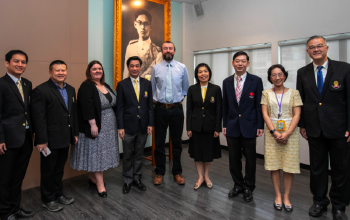
1.1 The Thai Red Cross Society: preparation of Queen Savang Vadhana Memorial Hospital and King Chulalongkorn Memorial Hospital as main teaching hospitals.
1.2 The faculties, colleges and schools of medicine of other higher education institutions, under the Consortium of Thai Medical Schools and the Medical Education Center, as well as the regional hospitals, general hospitals, community hospitals and medical service facilities, under the Ministry of Public Health: cooperation on specific requirement courses in student-selected components.
Cooperation on specific requirement courses in student-selected components and international clinical experience.
Some of the partners can be listed as follows:
1. Sydney Medical School, University of Sydney, Australia
1. School of Medicine, Jutendo University, Japan
2. School of Medicine, University of Tokyo, Japan
3. Okayama University, Japan
4. Kyushu University, Japan
5. Graduate School of Medicine and Faculty of Medicine, Osaka City University, Japan
6. Institute of Innovation for Future Society, Nagoya University, Japan
7. Graduate School of Medicine, Nagoya University, Japan
8. Faculty and Graduate School of Health Sciences, Hokkaido University, Japan
9. Fujita Health University, Japan
10. Oita University, Japan
11. Jikei University, School of Medicine, Japan
12. Tokai University, School of Medicine, Japan
13. Nakasaki University, School of Medicine, Japan
14.Jichi Medical University, School of Medicine, Japan
15. Kindai University, Graduate School of Medical Sciences, Japan
16. Yonsei University College of Medicine, the Republic of Korea
17. Seoul National University College of Medicine, the Republic of Korea
18. Gyeongsang National University College of Medicine, the Republic of Korea
19. Univeristy of Medicine 1, Yangon, Myanmar
20. University of Medicine 2, Yangon, Myanmar
21. University of Pharmacy, Yangon, Myanmar
22. Hubei University of Chinese Medicine, the People’s Republic of China
23. Shanghai Medical College, Fudan University, the People’s Republic of China
24. Kunming Medical University, the People’s Republic of China
25. Peking University Health Sciences Center, the People’s Republic of China
26. The University of Hongkong, Li Ka Shing Faculty of Medicine, the People’s Republic of China
27. China Medical University
28. College of Medicine, Teipei Medical University
29. Koahsiung Medical University College of Medicine
30. College of Medicine, National Cheng Kung University
31. The Institute of Nuclear Energy Research
32. National Taiwan University College of Medicine
1. Erasmus University Medical Center, the Netherlands
2. University of Liverpool, the United Kingdom
3. University of Glasgow, the United Kingdom
4. University of Leeds, the United Kingdom
1. University of Oklahoma, College of Medicine, the United States of America
2. The Cleveland Clinic Foundation, the United States of America
3. Office of Global Health Education of the Weil Cornell Medical College, Cornell University, the United States of America
4. Harvard School of Public Health, the United States of America
5. MD Anderson Cancer Center at University of Texas, the United States of America
6. David Geffen School of Medicine at UCLA, the United States of America
7. University of California, Los Angeles, the United States of America
8. Children’s Hospital Los Angeles (CHLA), the United States of America
9. University of Massachusetts Medical School, the United States of America
10. University of South Florida, the United States of America
11. MedStar Georgetown University Hospital, the United States of America
12. Keck School of Medicine, University of Southern California, the United States of America
13. University of Texas at San Antonio, the United States of America
E-Mail:
Expertise:
Clinical Interests:
E-Mail:
Expertise:
Clinical Interests:
E-Mail:
Expertise:
Clinical Interests:
E-Mail:
Expertise:
Clinical Interests:
E-Mail:
Expertise:
Clinical Interests:
E-Mail:
Expertise:
Clinical Interests:
E-Mail:
Expertise:
Clinical Interests:
E-Mail:
Expertise:
Clinical Interests:
E-Mail:
Expertise:
Clinical Interests:
E-Mail:
Expertise:
Clinical Interests:
E-Mail:
Expertise:
Clinical Interests:
E-Mail:
Expertise:
Clinical Interests:
E-Mail:
Expertise:
Clinical Interests:
E-Mail:
Expertise:
Clinical Interests:
E-Mail:
Expertise:
Clinical Interests:
E-Mail:
Expertise:
Clinical Interests:
E-Mail:
Expertise:
Clinical Interests:
E-Mail:
Expertise:
Clinical Interests:
E-Mail:
Expertise:
Clinical Interests:
E-Mail:
Expertise:
Clinical Interests:
E-Mail:
Expertise:
Clinical Interests:
Have you ever imagined being your own personal doctor and managing your own health sitting in front of a TV at home? Testing that once seemed risky out of the hands of medical professionals is now more than ever a touchable reality. The advancement of handheld technology has brought an explosion of personal health gadgets such as smart watches that can monitor heart rate, blood pressure, breathing, and calories burned. High-speed internet advances have allowed for the efficient use of mobile phone applications, online consultant services, telemedicine, and even AI therapists. Some laboratory tests can even be ordered from home at the click of the button, with tool kits delivered and results available quickly online.
Future prospects of healthcare are moving from being doctor-centered to the patient viewpoint. Disease treatments will also expand to lifestyle remedies and coaching and extend out from visits to the hospital to a 24/7 online service. We might see more data doctors, where personal information of patients is streamed through an online platform and managed by professionals behind screens in ‘Care Hubs.’ After analysis of the person’s health data, they can provide individualized consult to each person, and recommend fitness programs that utilize entertainment and games to increase compliance. Personal devices will have bio-sensors to detect critical vital signs like irregular heartbeats and will be able to immediately send alerts to their doctors for any signs of life threatening conditions. Healthcare will be accessible where ever as internet connectivity becomes more and more ubiquitous.